Executive Summary
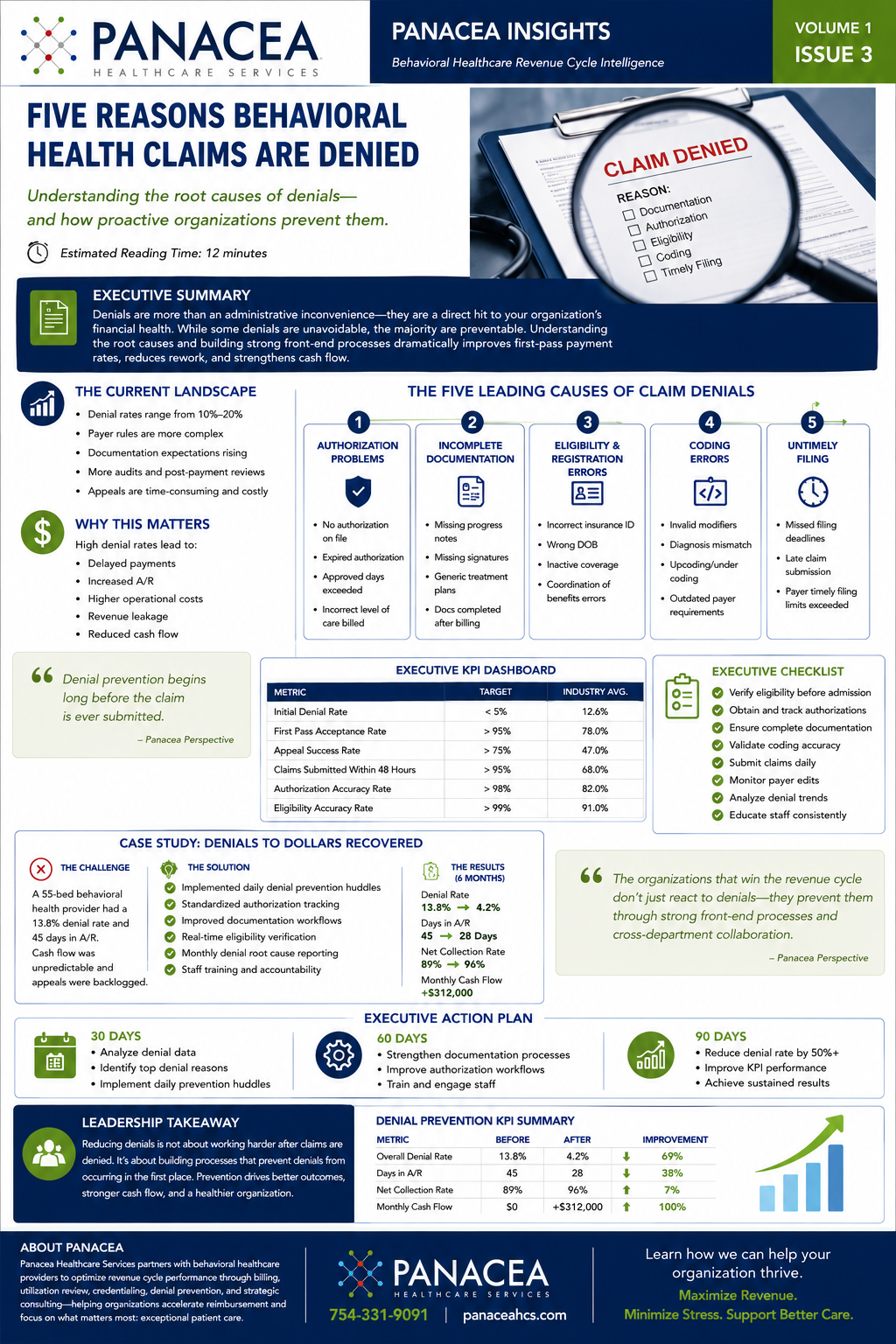
Claim denials are one of the largest threats to the financial health of behavioral healthcare organizations. Every denied claim delays reimbursement, increases administrative costs, and diverts staff away from patient-focused activities. While many organizations view denials as a billing issue, the reality is that most denials originate much earlier in the revenue cycle. Admissions, clinical documentation, utilization review, coding, and billing all influence whether a claim is paid the first time it is submitted. Building strong collaboration across these departments significantly improves reimbursement while reducing unnecessary rework.
Why Denials Matter
Behavioral healthcare reimbursement continues to become more complex as payers strengthen medical necessity requirements and documentation standards. A single denial often results in additional labor, delayed cash flow, and potential revenue loss. Organizations that monitor denial trends and address root causes create stronger financial performance while allowing clinicians to focus on delivering quality care.
1. Missing or Expired Authorizations
Prior authorizations and concurrent reviews are essential for many behavioral health services. Missed deadlines, incomplete submissions, or failure to obtain continued stay approvals frequently result in non-payment. Successful organizations maintain proactive authorization tracking and close communication between utilization review and clinical teams.
2. Insufficient Clinical Documentation
Clinical documentation must clearly demonstrate medical necessity, functional impairment, treatment goals, interventions, patient progress, and the need for the current level of care. Documentation that is incomplete or inconsistent weakens the organization's ability to support reimbursement during payer review or audit.
3. Coding and Billing Errors
Accurate ICD-10 diagnosis codes, CPT or HCPCS procedure codes, modifiers, and payer-specific billing requirements are critical. Small coding errors can lead to denials, payment delays, or unnecessary appeals. Routine quality assurance and claim scrubbing reduce preventable errors.
4. Eligibility and Benefits Verification
Insurance eligibility should be verified before admission and monitored throughout treatment. Coverage changes, authorization requirements, deductibles, and benefit limitations can all affect reimbursement if not identified early.
5. Untimely Claim Submission
Delayed documentation, coding backlogs, and inefficient workflows may cause organizations to miss payer filing deadlines. Timely submission of clean claims accelerates reimbursement and improves cash flow.
Leadership Perspective
Denial prevention is not the responsibility of one department. High-performing organizations create integrated workflows where admissions, clinicians, utilization review, coding, billing, and finance share accountability for revenue cycle performance. Regular denial analysis, staff education, and process improvement initiatives reduce repeat denials and strengthen long-term financial stability.
Executive Takeaway
Strengthen front-end insurance verification.
Maintain proactive authorization management.
Improve documentation quality through clinician education.
Perform routine coding and billing quality reviews.
Track denial trends and address root causes rather than symptoms.
About Panacea Healthcare Services
Panacea Healthcare Services specializes in behavioral healthcare revenue cycle management, helping providers maximize reimbursement through medical billing, utilization review, credentialing, denial management, collection recovery support, and revenue optimization.