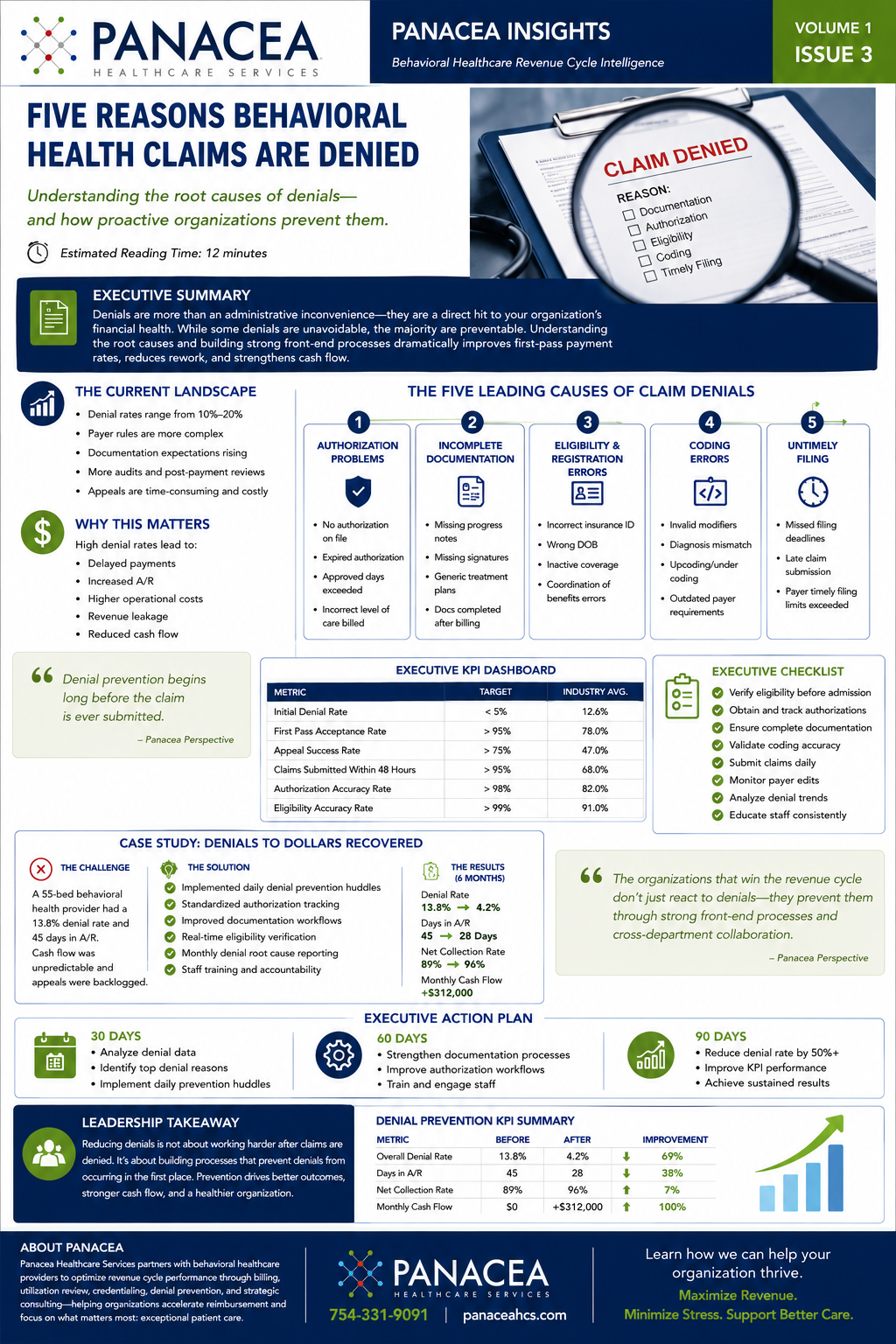
In behavioral healthcare, claim denials are more than an administrative headache—they directly impact revenue, cash flow, staff productivity, and ultimately an organization's ability to focus on patient care. While some denials are unavoidable, the majority can be prevented through stronger front-end processes, better documentation, and proactive revenue cycle management.
As payer requirements become more complex and audits increase, behavioral health organizations must prioritize denial prevention rather than simply managing denials after they occur.
The Growing Challenge of Behavioral Health Claim Denials
Industry denial rates often range from
10% to 20%, creating significant operational and financial strain. At the same time, providers are facing:
- Rising documentation requirements
- More complex payer rules
- Increased post-payment audits and reviews
- Lengthy and costly appeals processes
The consequences go beyond delayed reimbursement. High denial rates can lead to:
- Increased accounts receivable (A/R)
- Revenue leakage
- Higher operational costs
- Reduced cash flow
- Greater administrative burden on staff
The good news? Most denials stem from a handful of common issues that organizations can address before claims are submitted.
1. Authorization Problems
One of the most common reasons claims are denied is missing or inaccurate authorization information.
Common Authorization Issues:
- No authorization on file
- Expired authorizations
- Services provided beyond approved days
- Billing services that exceed the authorized level of care
How to Prevent It:
Organizations should implement robust authorization tracking systems and establish workflows that verify authorization status before treatment continues. Real-time monitoring helps prevent services from being delivered outside approved parameters.
2. Incomplete Documentation
Documentation remains one of the largest denial drivers in behavioral health.
Common Documentation Errors:
- Missing progress notes
- Missing signatures
- Generic or incomplete treatment plans
- Documentation completed after billing submission
Without proper documentation, even medically necessary services may not be reimbursed.
How to Prevent It:
Develop standardized clinical documentation processes that ensure records are complete, timely, and compliant before claims are submitted. Regular staff training and documentation audits can significantly reduce these denials.
3. Eligibility and Registration Errors
Front-end registration mistakes have a direct downstream impact on reimbursement.
Common Errors Include:
- Incorrect insurance identification numbers
- Wrong date of birth or demographic information
- Inactive insurance coverage
- Coordination of benefits issues
Even minor inaccuracies can trigger automatic claim denials.
How to Prevent It:
Conduct eligibility verification before admission and continue verification throughout treatment when appropriate. Real-time eligibility tools can help identify issues before services are rendered.
4. Coding Errors
Accurate coding is essential for clean claim submission.
Frequent Coding Problems:
- Invalid modifiers
- Diagnosis mismatches
- Upcoding or undercoding
- Failure to comply with updated payer requirements
Coding mistakes often result in unnecessary rework and delayed payments.
How to Prevent It:
Maintain ongoing coder education and regularly review payer-specific billing requirements. Internal audits can identify trends and reduce recurring errors.
5. Untimely Filing
Even a perfectly documented claim can be denied if it misses payer submission deadlines.
Common Causes:
- Missed filing deadlines
- Delayed claim submission
- Exceeding payer timely-filing limitations
How to Prevent It:
Implement daily claim submission processes and establish monitoring systems that identify claims approaching filing deadlines. Timely filing should be tracked as a key performance indicator across the organization.
Building a Strong Denial Prevention Strategy
The most successful behavioral healthcare organizations understand that denial prevention starts long before a claim is submitted.
An effective prevention strategy includes:
- Verifying eligibility before admission
- Obtaining and tracking authorizations
- Ensuring complete and compliant documentation
- Validating coding accuracy
- Submitting claims promptly
- Monitoring payer edits and denial trends
- Providing ongoing staff education
By focusing on these proactive measures, organizations can improve first-pass payment rates, reduce rework, and strengthen overall financial performance.
A Real-World Example of Denial Reduction
One behavioral health provider faced a denial rate of
13.8%, with an average of
45 days in accounts receivable. Cash flow was unpredictable, and appeal backlogs were growing.
After implementing:
- Daily denial prevention huddles
- Standardized authorization tracking
- Improved documentation workflows
- Real-time eligibility verification
- Monthly root-cause analysis reporting
- Staff accountability initiatives
The organization achieved impressive results within six months:
- Denial rate reduced from 13.8% to 4.2%
- Days in A/R decreased from 45 to 28
- Net collection rate improved from 89% to 96%
- Monthly cash flow increased by more than $312,000
These outcomes demonstrate that denial prevention is not simply a revenue cycle function—it is a strategic initiative that improves the financial health of the entire organization.
Leadership Takeaway
Reducing denials is not about working harder after claims are rejected. It is about creating processes that prevent denials from occurring in the first place.
Behavioral healthcare organizations that focus on authorization management, documentation excellence, eligibility verification, coding accuracy, and timely filing can dramatically improve reimbursement outcomes while freeing staff to focus on what matters most: delivering exceptional patient care.
The organizations that win the
revenue cycle don't just react to denials—they prevent them through strong front-end processes, accountability, and cross-department collaboration.
Looking for ways to improve your organization's revenue cycle performance?
Panacea Healthcare Services helps behavioral health providers optimize billing, utilization review,
credentialing, denial prevention, and strategic consulting to maximize revenue and support better patient outcomes.